Silicone, nylon or wood: which utensil for which pan

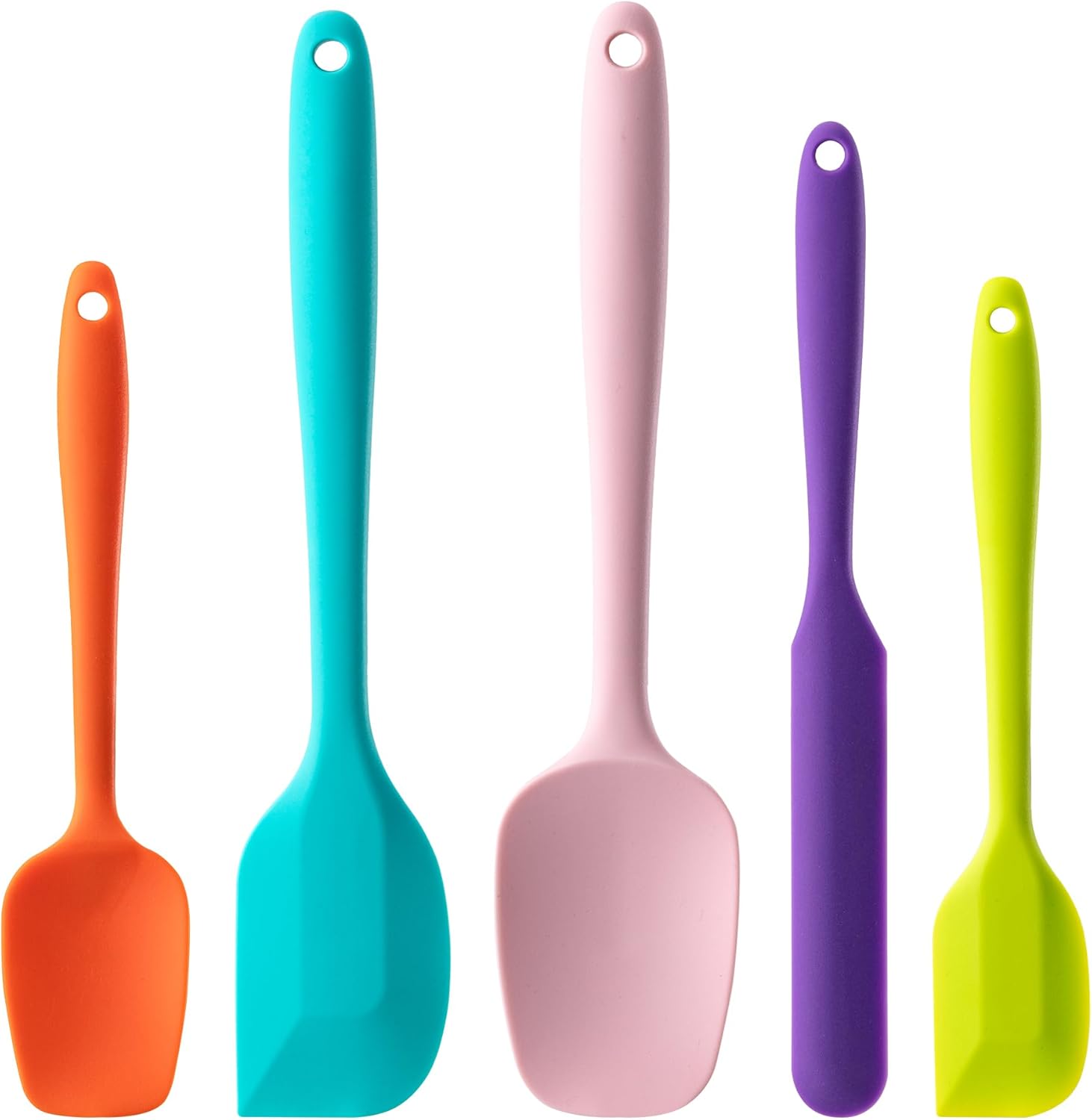
Most kitchen drawers contain all three materials without much thought about which is which. They are all safe on coated pans, which is the main thing, but they diverge sharply on heat tolerance, how they age and how they should be cleaned — and those differences determine which one you should reach for.
Silicone: highest heat tolerance, most flexible
Silicone handles the highest sustained temperatures of the three and stays flexible, which is what makes it good at scraping a bowl or getting under something in a pan.
Its weakness is stiffness: a soft silicone turner flexes under a heavy item. That is why better ones have a steel core, giving flex where you want it and rigidity where you do not.
Nylon: rigid and cheap, and the one that melts
Nylon is stiffer than silicone, which suits lifting and turning heavy food, and it is inexpensive. It is also the material most likely to be damaged by heat.
A nylon utensil left resting against a hot pan edge deforms, and once warped it never sits flat again. It is the most common way a utensil set is spoiled.
Wood: gentle, quiet, and it must not soak
Wood does not conduct heat, does not scratch anything, and does not react with food. Teak and acacia are dense enough to resist absorbing much moisture.
What ruins wood is water. Soaking or a dishwasher cycle raises the grain, and repeated cycles split it. Hand wash and dry, and a wooden spoon lasts decades.
Heat ratings are ceilings, not targets
A printed heat rating is the point at which the material begins to be affected by sustained contact. It is not a temperature you should aim to cook at.
In practice, keeping any utensil out of a pan when it is not being used avoids nearly all heat damage regardless of material.
Staining is cosmetic on silicone
Light-coloured silicone picks up colour from tomato, turmeric and paprika. It looks permanent and usually is not — a hot wash, or bicarbonate paste, lifts most of it.
It has no effect on performance or safety, and darker silicone avoids the issue entirely if it bothers you.
Match the tool to the job, not the set
A set gives you a matching drawer; it does not give you the right tool for everything. A flexible silicone scraper, a rigid turner and a wooden spoon cover most cooking between them.
If you only replace three things, those are the three worth choosing individually.
Materials on our shelf
The utensils here span all three materials, and every listing names which, since that determines both heat tolerance and how it should be washed. On our own shelf that range currently runs from $4.99 for the Badiano Nonstick Silicone Wok Spatula, Flexible Edge, 13.2-inch Black up to $8.99 for the Spring Chef XL Pastry Blender, Black Dough Mixer with Stainless Steel Blades.
The list below comes out of Cooking Utensils, presently 9 products. The prices here are the ones you will pay, with no late additions at the payment step.
- Badiano Nonstick Silicone Wok Spatula, Flexible Edge, 13.2-inch Black — $4.99
- Grip-EZ Fiskie 11-Inch Fork & Whisk Combo for Mixing & Mashing – 1 Count, Black — $6.28
- Hoewina 5-Piece Multicolor Silicone Spatula Set for Baking & Cooking — $6.49
- Honglida Silicone Wok Skimmer – Non-Scratch Slotted Spoon for Cooking & Frying — $7.99
- HOTEC Premium Stainless Steel Locking Kitchen Tongs with Silicone Tips, Set of 2 (9" & 12") — $7.99
- Spring Chef XL Pastry Blender, Black Dough Mixer with Stainless Steel Blades — $8.99
Related reading
Two other pieces on this site cover ground next to this one. Gluey mash is a starch problem caused by over-working, and the tool you use largely determines whether it happens. And on a related note, a mandoline is the most useful and the most dangerous item in most kitchen drawers, and the risk is entirely manageable.
- Getting mashed potatoes smooth without turning them to glue
- Using a mandoline slicer without hurting yourself
Mistakes that shorten utensil life
Leaving a utensil resting in a hot pan between stirs is the most common and it affects all three materials. Nylon deforms, wood scorches and dries, and silicone can soften if the contact point is hot enough for long enough.
A spoon rest, or simply taking the tool out and putting it down, removes the problem entirely. It is the single habit that most extends the life of a set regardless of what it is made from.
When to replace rather than persevere
Nylon that has warped no longer sits flat against a pan, so it stops doing the one job a turner exists for. Reshaping it is not possible and it should be replaced.
Silicone that has gone tacky has been overheated and will now attract residue permanently. Wood that has cracked through should come out of use with raw food. In each case the material is telling you clearly, and none of the three is expensive to replace.
A practical drawer
Silicone for scraping and high heat, nylon for rigidity at moderate cost, wood for gentleness and longevity. Keep nylon away from hot pan edges, hand wash the wood, and all three will last well.
Orders are packed in Los Angeles, CA. Shipping is $4.95 and free over $39; unused items may be returned within 30 days. [email protected] is the fastest way to reach us.