Furnishing a kitchen from nothing: what you actually need first

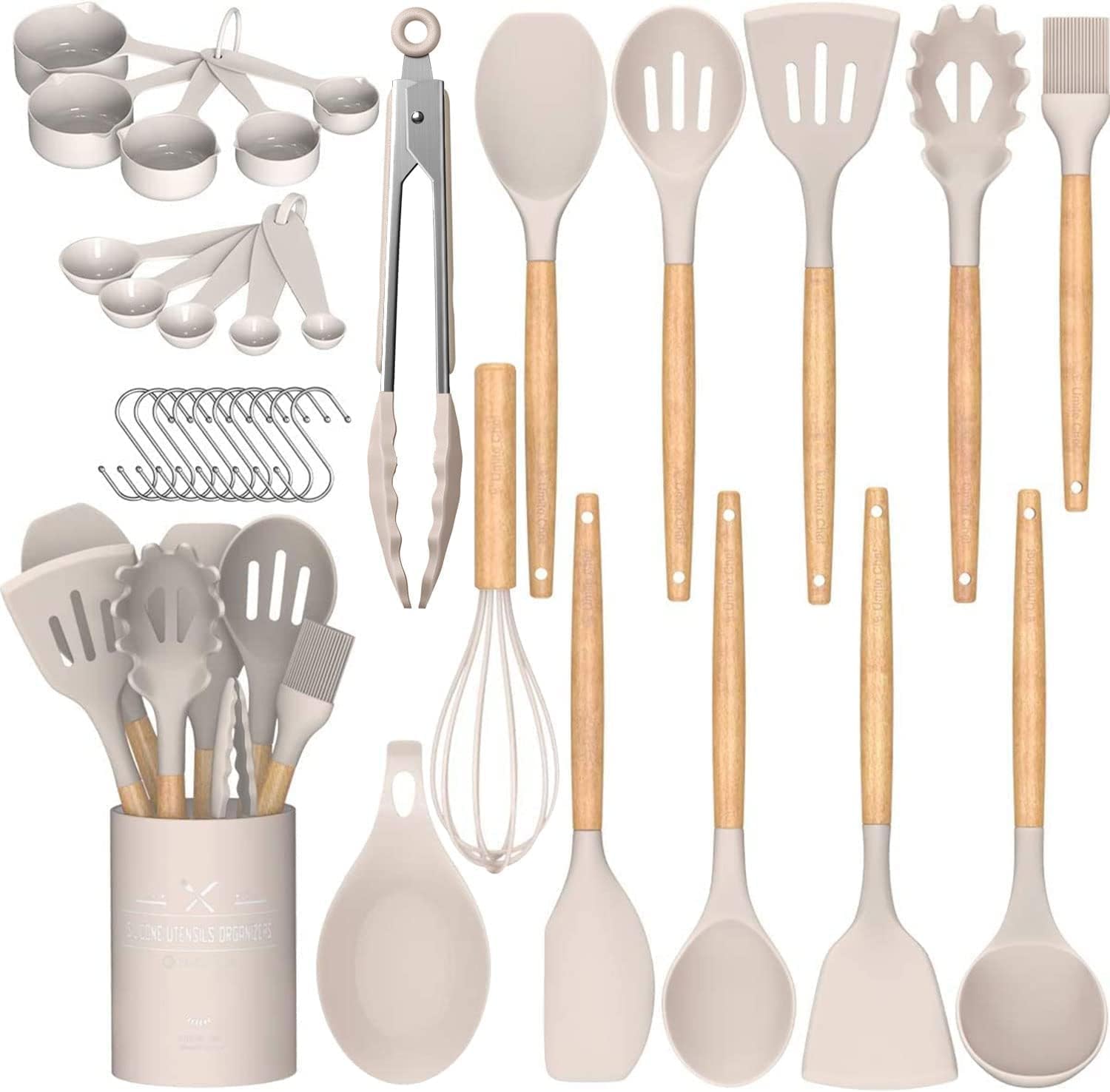
Moving into a kitchen with nothing in it invites either buying an enormous set or buying nothing and improvising badly for months. The useful middle is knowing which handful of tools does most of the work, and being honest about which of the rest you will actually use.
The genuinely essential handful
A turner for lifting and flipping, a large spoon for stirring and serving, a flexible scraper for bowls and pans, tongs for anything you need to grip, and a whisk. Those five cover the large majority of everyday cooking.
Everything else on a typical list is either a specialised tool or a duplicate of one of these in a different shape.
When a full set is the better buy
If you are starting with nothing, a set is substantially cheaper per piece and arrives with a holder, which solves storage at the same time.
The reasonable objection is that you will not use all of it. That is true, and it is still usually cheaper than buying six good individual pieces.
When buying individually wins
If you already cook and are replacing worn tools, buying the two or three you actually reach for beats a set every time — and you get better versions of them.
A set bought to replace one broken spatula is thirty pieces of storage problem you did not previously have.
A holder is not an accessory
Utensils in a drawer tangle and are slow to find. A holder on the counter keeps the ones you use constantly within reach and stops the drawer becoming unusable.
This is a genuine practical advantage of sets, and it is easy to underrate before you have lived with it.
Prioritise things that will not damage pans
A first kitchen usually has inexpensive coated pans, and the fastest way to ruin them is metal utensils. Silicone, nylon and wood protect the more expensive item.
Buying utensils that protect your pans is a better use of money than buying more expensive pans.
Add specialised tools when you meet the need twice
A ricer, a pastry blender or a meat chopper are all genuinely good at what they do and dead weight if you do not do that thing. The honest test is whether the need has come up more than once.
That rule keeps a kitchen equipped rather than cluttered, and it spreads the cost over time.
Sets and singles
This shelf carries both — full sets with holders for starting from nothing, and individual pieces for replacing what has worn out. On our own shelf that range currently runs from $19.99 for the Umite Chef 33-Piece Khaki Silicone & Wood Handle Kitchen Utensil Set with Holder up to $41.98 for the 15-Piece Kitchen Tool & Gadget Set in Black – Essential Utensils.
The list below comes out of Kitchen Tool Sets, presently 2 products. The prices here are the ones you will pay, with no late additions at the payment step.
- Umite Chef 33-Piece Khaki Silicone & Wood Handle Kitchen Utensil Set with Holder — $19.99
- 15-Piece Kitchen Tool & Gadget Set in Black – Essential Utensils — $41.98
Related reading
Two other pieces on this site cover ground next to this one. Wood splits because it swells and shrinks, and both are caused by water. And on a related note, tongs grip and turners lift, and using one for the other is why some food ends up on the floor.
- Why wooden utensils split, and how to keep them for years
- Tongs, turners and the difference between gripping and lifting
What people buy and never use
Specialised single-purpose tools are the usual answer: garlic presses, avocado slicers, strawberry hullers. They solve a problem that a knife already solves, and they take drawer space permanently.
Very large sets have the same effect in bulk. A thirty-piece set contains perhaps eight things that see regular use, and the rest is stored indefinitely because throwing away something new feels wasteful.
Spending where it makes a difference
The tools used daily justify spending more: a turner, a good pair of tongs, a solid spoon. The difference between a cheap and a good version of something used every day is felt constantly.
For anything used a few times a year, the cheapest acceptable version is genuinely the right choice. Spreading the budget evenly across everything is how kitchens end up with mediocre versions of the things that matter most.
Buying secondhand and what to avoid
Stainless tools, wooden spoons and cast iron are all worth buying used, because they either clean up completely or can be restored. A well-made stainless whisk is the same tool at half the price.
What is not worth buying used is anything with a coating or a plastic mechanism. A secondhand nonstick pan has an unknown history of overheating, and a worn coating is the one problem you cannot see and cannot fix.
A sensible first order
If the kitchen is empty, buy a set with a holder. If you are replacing, buy a good turner, a scraper and a pair of tongs individually. Either way keep everything nonstick-safe, and add specialised tools only once you have wanted them twice.
Orders are packed in Los Angeles, CA. Shipping is $4.95 and free over $39; unused items may be returned within 30 days. [email protected] is the fastest way to reach us.