Getting mashed potatoes smooth without turning them to glue

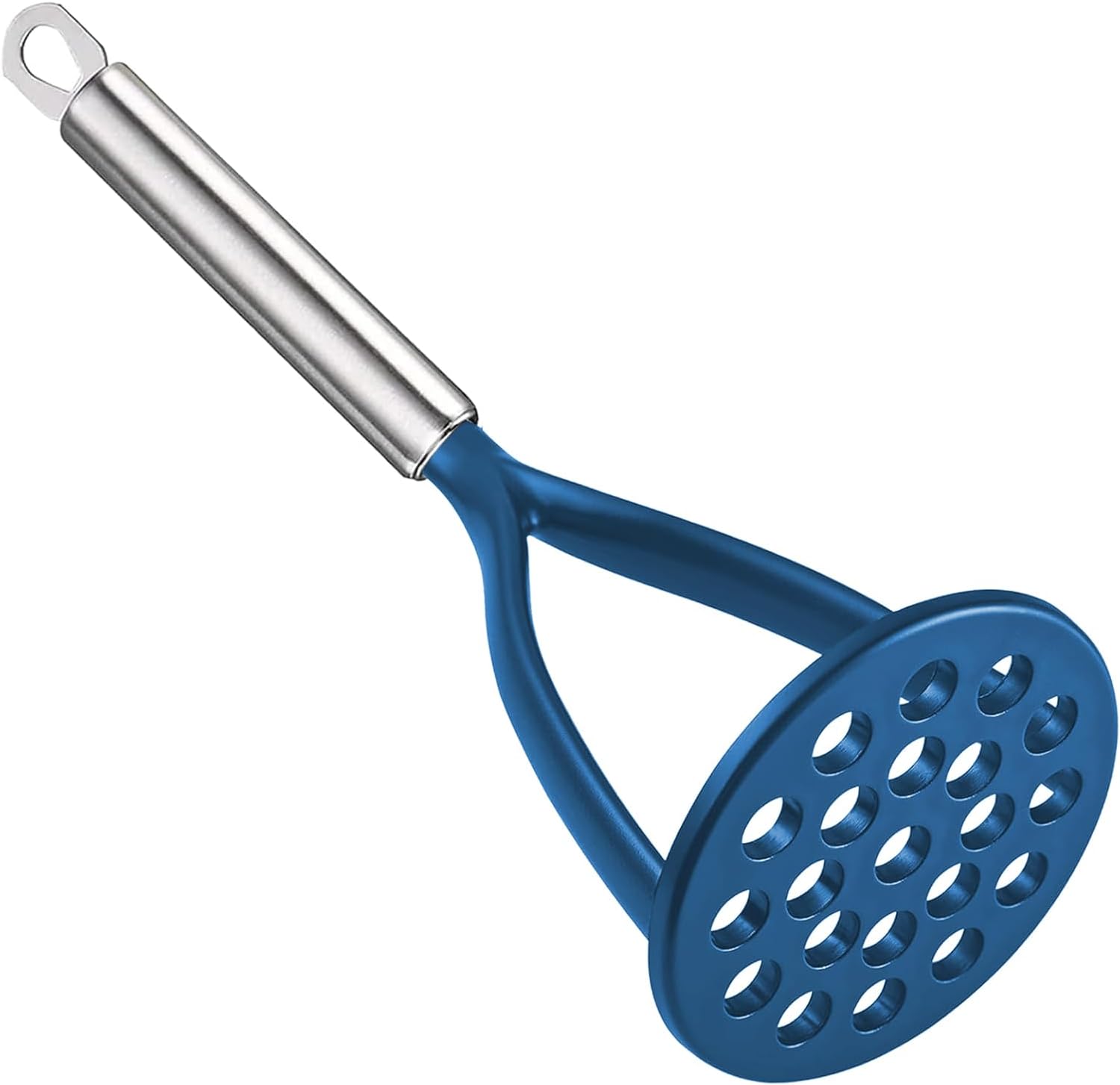
Mashed potato turns gluey for a specific and well understood reason, and once you know it the fix is obvious. Potato cells are packed with starch granules. Rupture them and the starch is released into the mix, where it forms the sticky, elastic texture nobody wants. Everything else follows from avoiding that.
The mechanism: broken cells release starch
Ideally you want to separate the cooked potato cells from one another while leaving them intact. Crushing or beating them ruptures the walls and releases free starch.
This is why a food processor is the worst possible tool. High-speed blades shred cells thoroughly and produce a texture close to wallpaper paste.
A ricer separates cells instead of crushing them
Pressing cooked potato through small holes pushes the cells apart with relatively little rupturing, which is why a ricer gives the lightest, fluffiest result.
It is the tool professional kitchens use for exactly this reason, and it is the single biggest upgrade available for mash.
A masher is fine, if you stop early
A plate or wire masher works well provided you stop as soon as the lumps are gone. The damage comes from continuing to work it after that point.
Nylon mashers have the practical advantage of being safe in a nonstick pan, so you can mash in the pot you cooked in.
The potato variety matters as much as the tool
Floury, high-starch potatoes break down readily and mash light. Waxy potatoes hold together and resist mashing, so people work them harder — which causes exactly the problem.
Choosing a floury variety means less work, and less work means better texture.
Dry the potatoes before mashing
Potatoes hold a surprising amount of water after boiling, and water dilutes flavour and makes the mash loose, tempting you to compensate by working it more.
Drain thoroughly and return them to the hot dry pan for a minute. The surface moisture steams off and the mash is noticeably better.
Warm the dairy before it goes in
Cold butter and milk hitting hot potato cools everything and stiffens the mix, which again encourages over-working. Warming them first lets everything combine with minimal stirring.
Fold the dairy in gently rather than beating it. Once the potato is riced or mashed, the goal is to disturb it as little as possible.
Tools for this
This shelf carries both ricers and mashers, including nylon versions that are safe to use directly in a coated pan. On our own shelf that range currently runs from $7.69 for the WJIAAA 3-Piece White Plastic Fine Mesh Strainer Set with Handle up to $19.99 for the A&O Teak Wood Meat Chopper & Masher for Ground Beef and Turkey, 10.5 Inches.
The list below comes out of Food Preparation Tools, presently 5 products. The prices here are the ones you will pay, with no late additions at the payment step.
- WJIAAA 3-Piece White Plastic Fine Mesh Strainer Set with Handle — $7.69
- TENTA KITCHEN Good Grips Nylon Potato Masher with Stainless Steel Handle, Blue — $9.99
- Gerior Non-Scratch Nylon Potato Masher, Black – Dishwasher Safe Tool for Mashed Potatoes — $13.99
- Minteem Large 15oz Red Potato Ricer for Mashed Potatoes & Baby Food — $17.99
- A&O Teak Wood Meat Chopper & Masher for Ground Beef and Turkey, 10.5 Inches — $19.99
Related reading
Two other pieces on this site cover ground next to this one. A mandoline is the most useful and the most dangerous item in most kitchen drawers, and the risk is entirely manageable. And on a related note, most starter lists are far too long. A surprisingly small number of tools covers most cooking.
- Using a mandoline slicer without hurting yourself
- Furnishing a kitchen from nothing: what you actually need first
Recovering mash that has gone wrong
Gluey mash cannot be un-glued, because the starch has already been released and there is no way to put it back inside the cells. Working it further only makes it worse.
It can be repurposed, though. Gluey mash makes perfectly good potato cakes or a topping that is going under a grill, where the dense texture stops mattering. That is a better outcome than throwing it out.
Seasoning and holding it warm
Potato absorbs a surprising amount of salt, and mash seasoned to taste while hot often tastes flat once it cools slightly. Seasoning in stages and tasting at serving temperature gives a more reliable result.
To hold mash warm, cover it and keep it over gentle indirect heat rather than stirring it periodically. Every stir works the starch further, so mash held for half an hour and stirred repeatedly ends up worse than it started.
The short method
Floury potatoes, drained and dried in the hot pan, put through a ricer or mashed just until smooth, with warmed butter and milk folded in gently. Stop as soon as it comes together, and it will not go gluey.
Orders are packed in Los Angeles, CA. Shipping is $4.95 and free over $39; unused items may be returned within 30 days. [email protected] is the fastest way to reach us.